
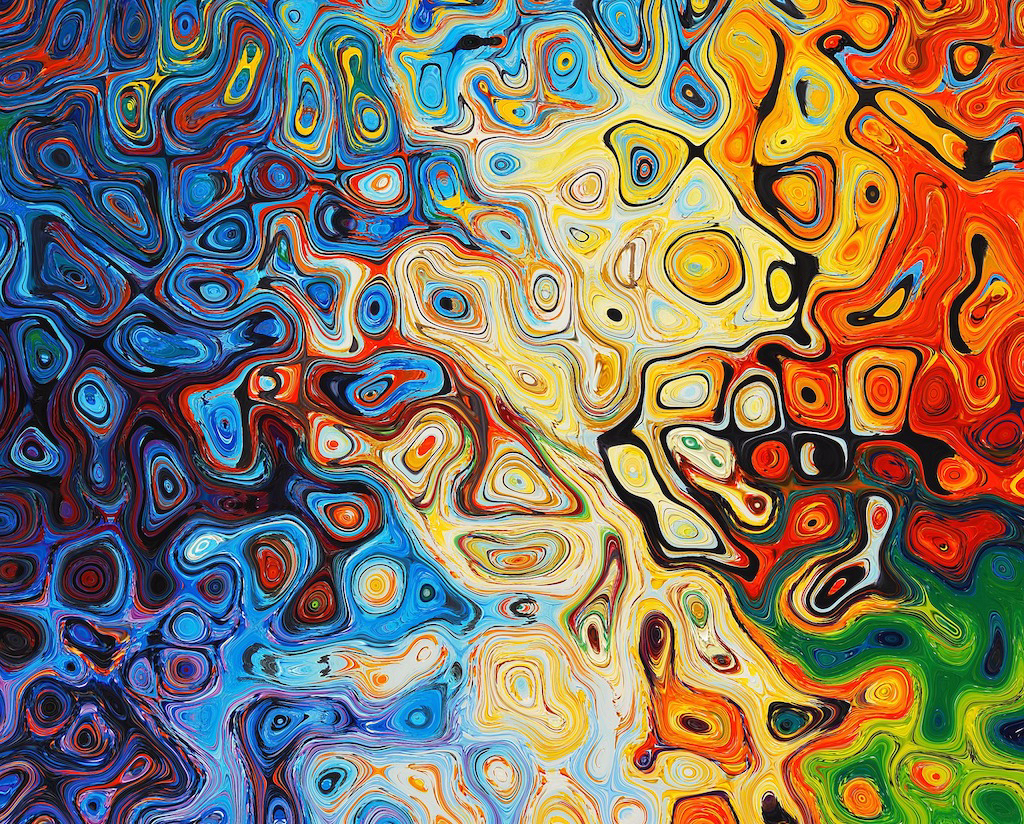
Art is a powerhouse of sensory stimulation matched only by nature–which it so often depicts–in its reputation as soul food. Recently, I had a long overdue art fix with friends that started at the MET on Saturday and ended on Sunday with the Van Gogh Immersive Experience, a multi-sensory art event.
Van Gogh purportedly had a neurological condition called synesthesia, specifically in his case, chromesthesia. British neurologist, Dr. Oliver Sacks, described synesthesia as “an immediate, physiological coupling of two sorts of sensation.” Synesthetes might equate taste with different shapes or colors with certain numbers. Red is five, two is blue, three yellow, and so on. In letters to his brother Theo, Vincent described seeing colors when he heard music.
The immersive experience channeled Van Gogh’s art through the lens of his chromesthesia in a spectacular audio-visual movie that felt not only multi-sensory, but multi-dimensional. At times, the floor seemed like it shifted underfoot or slid lower on one side. Music and light effects served as conduits from one period of his art to another and enhanced the art being projected on, not just the walls, but ceilings and floors.
Sacks devoted his life to treating, researching, and writing about neurological conditions, including synesthesia. These types of conditions are rarely celebrated in the moment, but Sacks found a way to explore and explain them to a broad audience, opening a portal to people who perceive differently, who live alternate realities. Van Gogh, who suffered from depression and mental instability unrelated to his synesthesia, took his own life at age 37 and was only recognized as an artistic genius posthumously.
We alternately crave peace and stimuli to rejuvenate us. Both coexist together in one electrically charged human body living in a magnificently connected whole. Does Van Gogh’s arc suggest a kind of transformation that we cannot foresee or control, one that begs us to perceive differently in real time and not wait for history to show the way? We can be awed right now, not dismiss the uncomfortable, but instead experience with a multi-sensory heart that asks, “What am I being shown? What can I learn? How am I connected?”
 Divine Ready
Lovely! Love how you pull together Sacks, Van Gogh and his way of seeing music as color, and color as sound. And then pose the question of what this kind of deeper seeing could tell us about perception. Lovely essay, Jan!
LikeLike
Thank you for getting this!
LikeLike
What a great lesson in art! I love and appreciate the way you mix history and information into a beautifully written synopsis of your weekend adventure. Always enjoy reading your thoughts.
LikeLike
thank you, Sarita!
LikeLike