
Lipstick Reveal

I never read Marcel Proust’s seven-volume novel Remembrance of Things Past known both for its length and focus on involuntary memories as launchpads for the larger story. The taste of a madeleine cake dipped in tea prompts the narrator to have a childhood memory of eating the same snack which leads to other memories. 

I had an involuntary memory myself recently. I was fascinated by the discovery in southeastern Iran of an ornate chlorite vial presumed to be a 4,000-year-old lipstick. While not confirmed to be lipstick, the study authors said the materials that composed the cosmetic were “fully compatible with recipes for contemporary lipstick.” It was unearthed after a flood exposed the contents of graves in the area. Researchers guess it might have been part of a funeral ritual but also a cosmetic for lips and cheeks used by both women and men. 

The discovery of this lipstick brought me right back to a childhood memory of a forbidden exploration in my mother’s purse. Her red lipstick in a gold tube with matching gold compact and mirror were my two biggest finds. I can close my eyes now and smell them as vividly as if I were holding them.

Did it jumpstart an epic novel or novella, a short story or even a flash fiction? No. I think the paragraph above is all I’m getting, at least for now. It did make me think of all that mothers hold, not just in their purses but in their hearts and the small pleasures they allow themselves and what they cost to purchase on a tight budget. And it is not only our birth mothers, or mothers who took us in, or the women in our lives who become like mothers who hold so much for us but also what Mother Earth and Mama Ocean hold unasked, a list of discoveries and abuses too long to itemize. 

Oh, the things they keep revealing about our behavior and past civilizations, our greed and fears, our hearts’ desires and how things change but remain the same. We are forever finding ourselves, in memories, in unexpected discoveries and stories, even in loss, often in loss. Like Narcissus staring at his reflection, it’s compelling and mystifying. Who are we? These unexpected journeys of discovery are part of our evolution of love and compassion, of understanding our world, ourselves and each other.
Fast Car

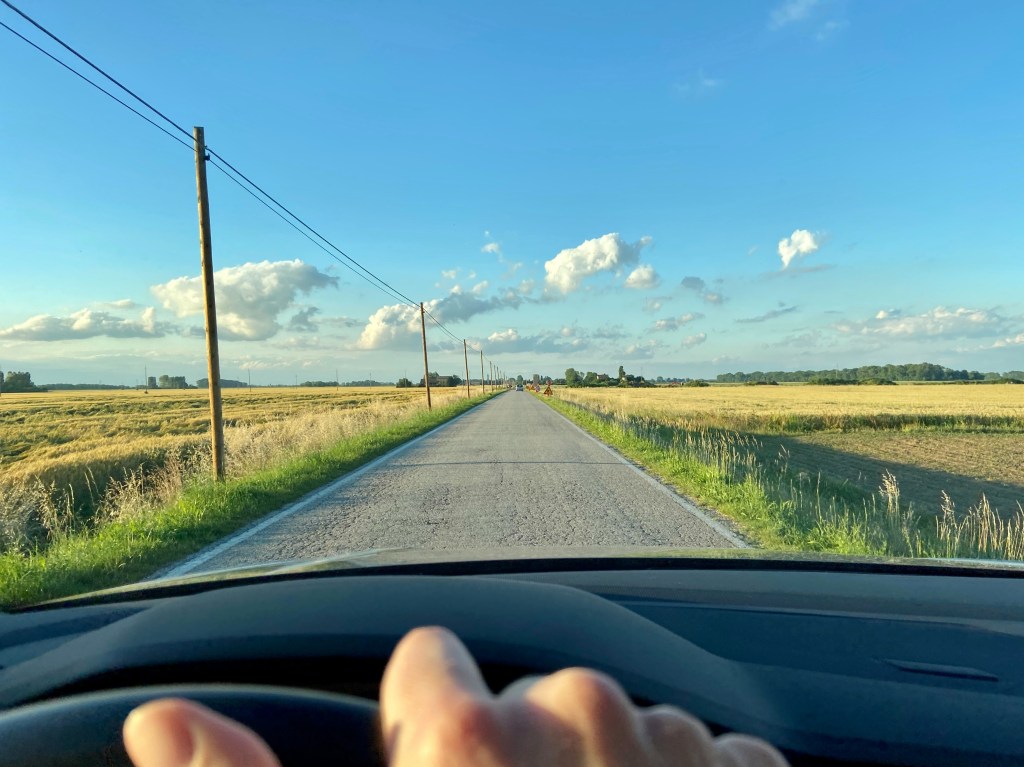
Photo by Alessio Patron on Unsplash

One of my favorite parts of the Grammys is when younger musicians play a song with one of their idols. This year’s performance by Tracy Chapman and Luke Combs singing Chapman’s 1988 breakout song “Fast Car” had the audience on their feet and was one of the highlights of Grammy news the following day, in part because of Chapman’s rare appearance but also because of Combs’ unabashed awe and adoration of Chapman. It was like watching a child with one of his superheroes. 

Combs did a popular cover of Chapman’s “Fast Car” last year. He has shared that he first heard the song on the radio when he was young and riding around with his dad in his pickup truck. A passion was stoked. 

I was much older than Combs when “Fast Car” came out, but the song resonated at the same soul level for many of us from small towns eager to get out in the world, to jump in a car and go, go fast. We absolutely knew what Tracy was talking about when she sang, “I had a feeling I could be someone, be someone, be someone.” A longing for passion to manifest burned.

The meaning of passion has transformed over the years. Originally it referred to the Passion of Christ and then suffering in general. The religious meaning endures. It was later identified with madness and then with intense desire—often romantic but not necessarily—or enthusiasm.

Before the Grammy’s, and unrelated, I had an email exchange with some friends about passion which caused me to wonder if I might lose mine and if so, how to get it back and how to keep it burning? Passion can get lost or dim in the doing of the day-to-day or in times of sadness, worry, anxiety. It requires attention to prevent it from smoldering out, but it absolutely can and should be revived or ignited. 

Passion gives life its zest, informs our purpose, keeps us burning for more. Like the etymology of the word itself, our passions can transform throughout our lives, some being left behind, others growing in intensity. Passion is not ageist. I know several people in their 80s and 90s who have plenty of passion. It’s having none that is untenable and makes for a lackluster life. So, here’s to indulging in, igniting, discovering, or reigniting your passion! And if that means a drive in a fast car with your favorite cruising tune cranked up, give me a shout.

Good Vibrations

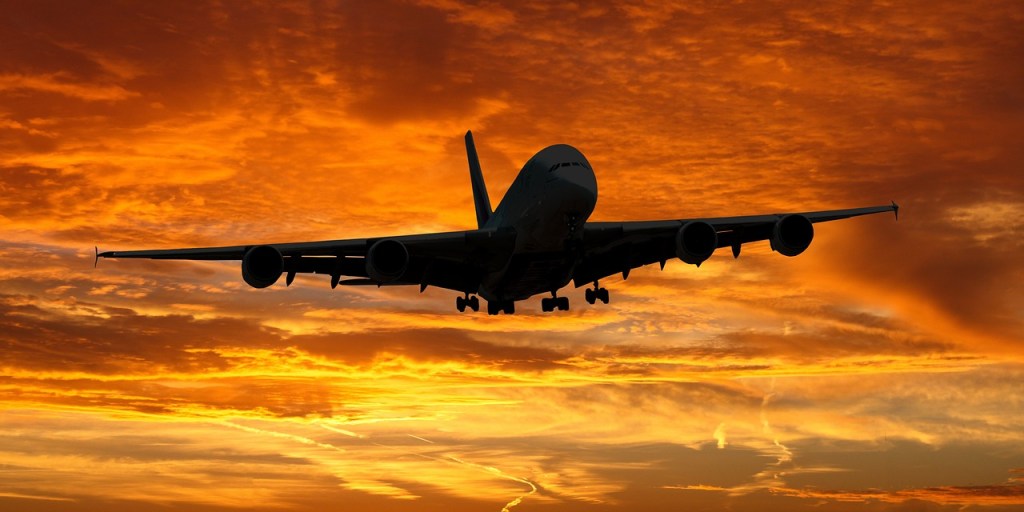
Image by G.C. from Pixabay

I don’t usually make New Year’s resolutions because I rarely stick to them. But something happened recently that has me thinking this year might be different. I was scheduled to fly back to the East Coast from the West on a Boeing 737 Max 9 and was among the thousands whose flights were cancelled.

From a young age, I’ve been claustrophobic, which means I go out of my way to avoid small or crowded spaces. I often book flights based on whether or not I can sit near the front to make disembarking less intense. When so many flights are cancelled, rescheduling options are limited, and I found myself booked a day later in a window seat in row 41 of an airbus. Fear, which usually sleeps in some dark corner of the house, seized the opportunity to awaken and inhabit all the rooms. 

It is challenging to drown out a phobia’s persistent noise, which is manifested via emotional, mental, and physical discomfort, not unlike grief in that sense. Logic is useless, but I told myself there were much worse things going on in the world. It was indulgent to allow fear to take over. Time to take a breath, several of them, in a measured intentional way, not hyperventilating and pacing in circles.

Everything in the world is energy and vibration. The human energy body has been likened to a tuning fork. High emotional states like love, gratitude, and peace cause us to vibrate at higher frequencies than low emotional states like anger, fear, and hate. I think we’ve all experienced the difference.

Practices like breath work, meditation, yoga, qigong, tai chi and others can help us calm down, reconnect to our bodies. Even if not practiced regularly, they can provide instant relief by steering the focus from the emotional/mental state of anxiety to the body and breath.

I hit the Insight Timer app and listened to several guided meditations the night before I flew. I downloaded videos and had a novel. I did some walking and stretching. Still, I told my brother on the way to the airport, it was Code Red in Jan Land. And yet, incredibly, when the time came it was more like Code Crystal Blue Persuasion, a new vibration. I settled into my seat, put on my headphones, and made a New Year’s resolution to really work on this phobia. We’ll check in again after my next flight. Until then, inhale, exhale.

Tack så mycket!

If the only prayer you ever say in your entire life is thank you, it will be enough. ~Meister Eckhart

About a week after we had my stepmom’s celebration of life, out of nowhere, I heard “Tack så mycket” in my head. Swedish for “Thank you so much,” it’s a phrase I heard often growing up, a phrase I should be saying to her morning, noon, and night.

It came into my head again today when I got home, after a conversation I had with a friend wherein I told her I didn’t feel like writing about gratitude, even though with Thanksgiving on Thursday, it’s prime time for an appreciation reflection. It’s hip to be grateful these days. It’s become not just a spiritual practice like meditation and prayer but also marketable through all the usual channels. Are we more grateful as a result? I worry I’m missing something, that I’m not doing gratitude right, not journaling enough—or at all—about it, not feeling it enough, not spreading it around properly. 

Hearing tack så mycket again in my head made me think it was my Swedes on the other side telling me that’s what I needed to write about whether I wanted to or not, maybe then a river of gratitude would flow from me. That phrase, first heard in my childhood, also made me wonder when I first learned about and expressed gratitude. At least initially, it was often tied to gifts.

My brothers and cousins and I had to write thank you letters to our grandparents for Christmas and birthday presents. Some of those letters are now in my possession. If they touched and amused my grandparents as much as they do me now, then they were well worth writing.

Gratitude is born of and begets love, so writing a thank you note is an act of not only gratitude but love. I’ve often thought it would take a book, possibly a series of them, to express the proper amount of appreciation to all the people I’ve met, known and loved and for all the care, kindness, forgiveness, gifts of every sort, and blessings that have been bestowed upon me, not only by people I know but by strangers. Maybe that’s in my future. For now, river flowing, tack så mycket to you, and you, and you!

Altarations #2

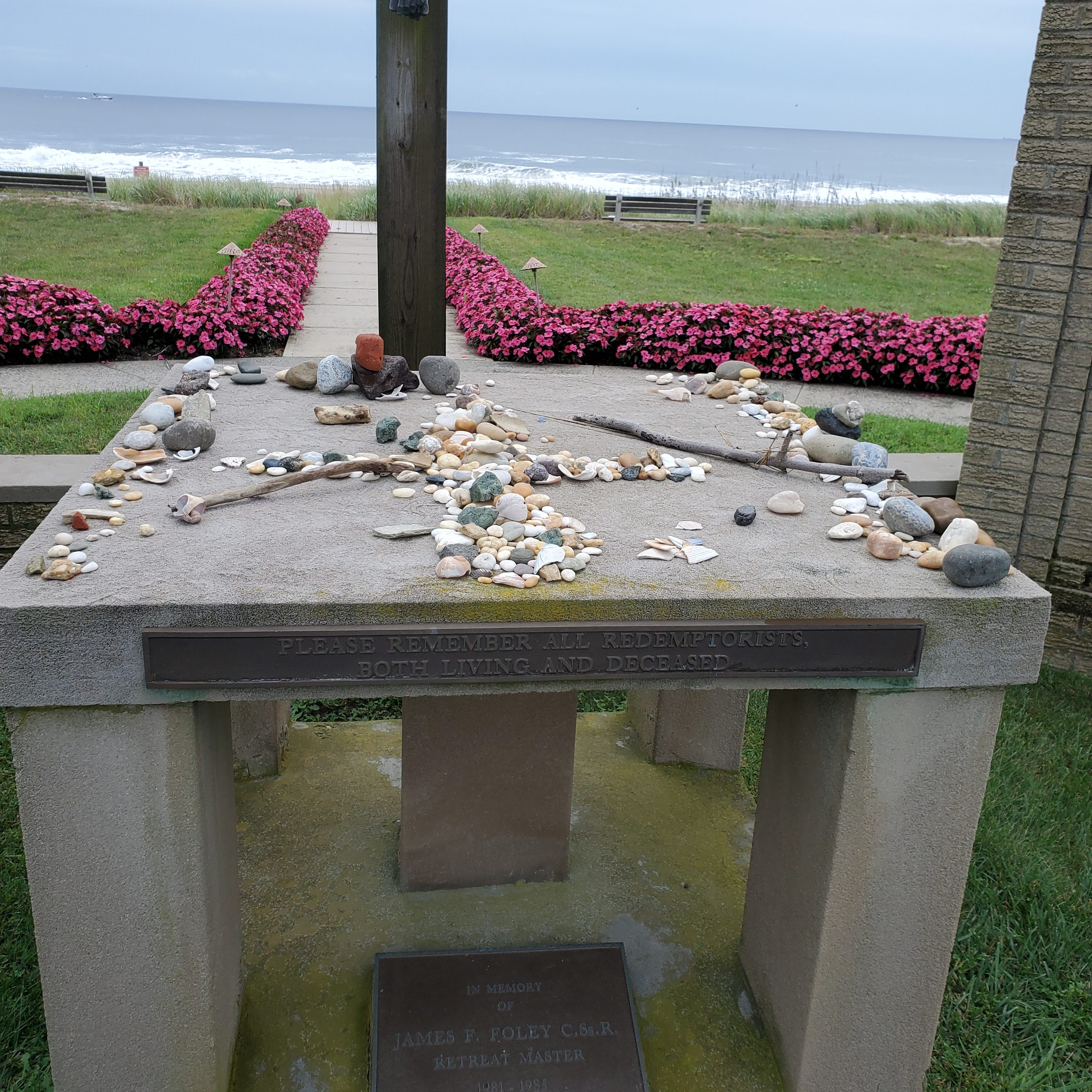
During a break in our meeting at San Alfonso Retreat House, a friend and I took a walk on the near-empty beach. On our return, we made our way to the retreat center off-path, walking towards a towering crucifix, its back facing the sea, in front of it a square stone altar covered in offerings from the ocean.

I love altars. They are the draw for me. Ocean as backdrop? I am worshipping. I placed my own recent find, a smooth white stone, among the treasures.

My friend held up two stones plucked from the altar. “Look, they’re stuck together.”

Had someone glued two beach stones together? Why? Should we be touching, moving, picking up things from the altar? Wasn’t that prayer tampering? Interfering with potential blessings? What is sacred, if not an altar?

“Everyone picks up things and moves them on this altar,” she assured me.

I looked protectively at my stone.

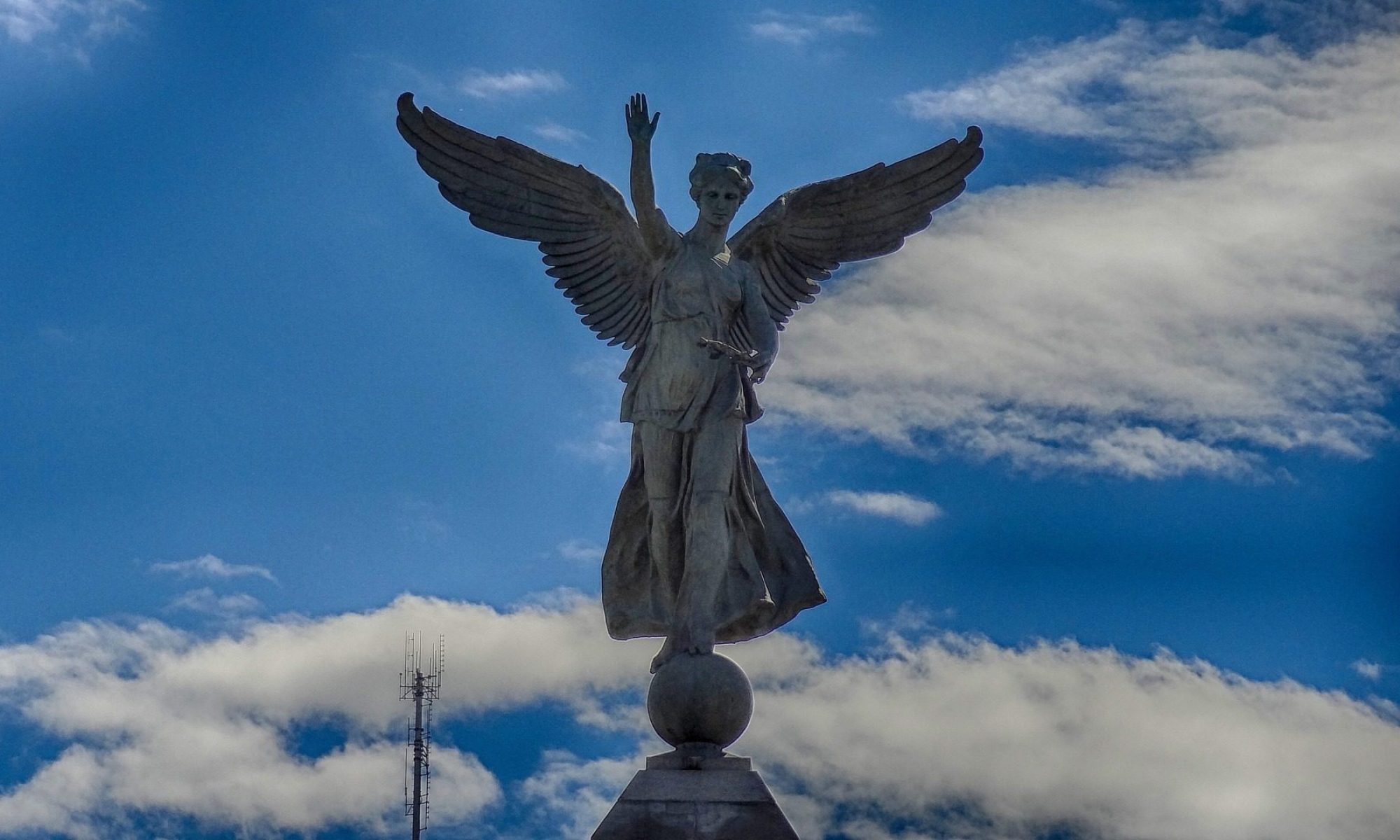
The first altars were rocks, trees, springs, sometimes a mound of earth, believed to be inhabited by gods or spirits. Offerings were laid on or near them in exchange for hoped-for divine intervention. Later, altars were bloodied by sacrifices, animal and human. Altars can metaphorically exalt people; they worship at the altar of (insert name of writer, actor, athlete, magnificent person). They can be plain and simple or adorned and elaborate, fixed or moveable, visible or secretly internal and always accessible.

The next day, I returned to the altar by the sea and somehow managed to find my offering among the rearranged stones, now formed in the shape of a cross. I took it back feeling both guilty and righteous. 

That stone will find its way to a windowsill or shelf at home or in my office with other rocks, crystals, feathers and whatnot, personal mini altars I seem forever in need of creating, having nearby. Altars, whether grand or small, signal a pause, a moment of grace, a sliver of renewal and transformation, a place to bring offerings, to wonder, wish, and yes, worship, if it suits. Before I left San Alfonso’s, I placed a different stone on the altar, one just as difficult to part with, a small act in a graced never-ending ritual of giving and receiving. There is no tampering with that.

Word Bath

Image by ThePixelman from Pixabay

Some of us are more preoccupied with words than others, but all of us use and need them. Words are the building blocks of stories, the conduit for emotional expression, how we do business, the ingredients for blessings and prayers, music to our ears, and yes, there are times we are at a loss for them. For those of us who love them, they are a source of endless delight and fascination and sometimes even frustration. As we downshift into mid-summer and kick back in a hammock, laze on a deck, or lounge on the beach with a book, I offer, in no particular order, a snippet of words that I love to read or hear. 

Baubles: A word used by my grandfather long ago to describe my grandmother’s jewelry.

Sneak:  Done by children, lovers and thieves when about to do something secret and usually forbidden. Shhhhh.

Whisper: Done by children, lovers, and thieves, and sometimes rude people in theaters or when gossiping about others. 

Apoplectic: Used in casual conversation by my cousin when talking about a certain pundit.

Voilà!  Words of French origin: apropos, croissant, boudoir, bouffant, chamois, covet, debauchee, entourage, epicurean, exhortation, fete, frou-frou, gazette, and we’re not even halfway through the alphabet.

Bon appetito mi famiglia! Joyfully exclaimed when breaking bread, sipping wine, talking, smiling, and laughing with friends.

Poppet as in adorable children or little dolls.

Onomatopoeic words: buzz, hiss, whoosh, whir, crash, clip, clap, clop, pitter-pater, pop, to name a few, and good grief, alliterative phrases, too!

Murmur: done by shy people, what you hear when trying to listen to people talking at a distance from you, a heartbeat that isn’t quite right.

Collective nouns for birds: a murder of crows, a conspiracy of ravens, a murmuration of starlings, a wisdom of owls, an asylum of cuckoos. 

Visceral: You can just feel it.

Mercy: An old-fashioned feminine name but also to dole out compassion and forgiveness, best when preceded by tender.

Words of the divine: tabernacle, exalt, holy, praise, devotion, beloved, seraphim, sacred, you are mine.

Amazing Grace: May we all be blessed enough to hear that sweet sound, not just the song.

The soothing words of peace: pax, paz, mir, shanti, pace, shalom.

Finito: All done, finished.

Rip Current

Woods Hole Oceanographic Institute – Oceanus

None of the tools in the toolbox are working. The four-mile walk didn’t clear the rumbly rumbles from your head. Meditation failed to take it down a notch. There isn’t a song to lift you out of it. Everything your generous, well-meaning friend suggests is wrong.  And there isn’t a Tiffany’s nearby to quell the mean reds. The more you resist and fight, the stronger the undertow seems to get.

Rip currents can be deceiving because the water looks calm, but it’s very dangerous. If you get caught in one, you are advised not to struggle against it, despite the panicky impulse to do so.  Instead, turn sideways and swim out of it, and if you can’t do that, float or tread water. A rip current loses energy and dissipates as it moves out past the breakers.

Walking past the bus stop, a young woman speaking Spanish, a language you should have doubled down and learned by now, asks for your help. She is asking you, you think, when the bus is coming. Somehow, between her miming and limited English and your limited Spanish, you cobble together that she wants to go to Burlington Coat Factory to buy her husband socks and shorts and a hat for Father’s Day with the gift certificate she pulls out of her purse to show you. You guess that certificate was a gift to her, but instead she is using it to buy a gift for her husband. You come to understand that he usually gives her a ride—to work, to the store, to wherever she needs to go—but today, this is for a surprise for him. In the end, you still can’t answer her question and manage to say, “I’m sorry” in Spanish. 

You would like to go home and get your car and come back and give her a ride, but you’re still a mile from home and you aren’t sure how to communicate this plan. You go into the bank and when you get out, you see her further down the sidewalk talking to two gentlemen. She turns and sees you, waves and smiles, “It’s okay.”  

Walking home, you realize the mean reds have retreated. You just turned sideways and swam out of a rip current.

Fortifying the Nest

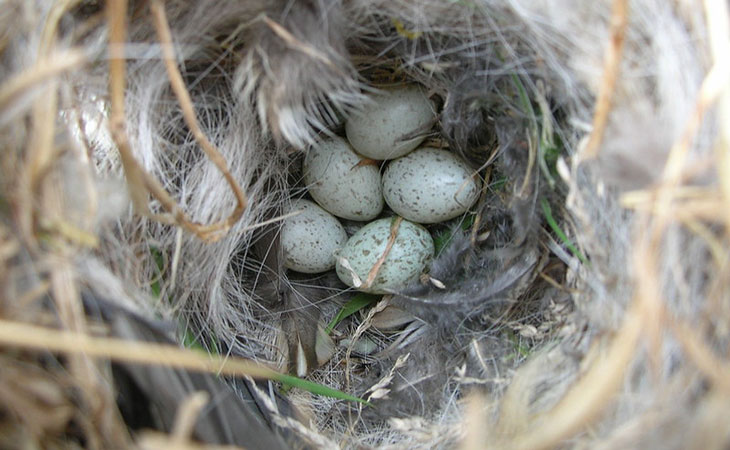
On one of my morning walks, I watched from a distance as a small sparrow struggled to take flight with a piece of plastic easily four times her size. She would catch a corner in her beak and start to lift off, then drop the unwieldy find. She couldn’t quite get a purchase. As I walked closer, she abandoned it altogether and lit in a nearby bush. I knew without turning around that she would go back to it when I was safely out of range.

She got me thinking about what we carry that we keep hidden away for any number of reasons. Many of us do not want others to see our struggles, whatever they are, our pain, or maybe even shame. Maybe we’re being stoic and don’t want to trouble anyone, or maybe we need to keep things hidden because of our jobs or to keep peace with family and friends.

I found myself remembering the two French professors I had my first year of college. My first semester professor was fun and popular. The second semester professor was serious; her teaching style more rote. I ran into the first professor at a party, and when she asked how things were going, I complained about my second French professor. She told me to go easy on her; she had lost her fiancée in a car accident the previous summer.

It wasn’t the first time I realized that we don’t know what others are carrying, but it’s the first time I remember it really sinking in, which doesn’t mean I’ve always behaved in a way that acknowledges that. It’s a lesson I need to remind myself of over and over. 

Sometimes people don’t respond or act in a way we hoped for or expected. Every person we encounter, even glancingly, is struggling, has struggled, or will be struggling with something larger than they may be able to carry at any given moment. It’s easy to forget that in the day to day or when we are trying to get a grip on our own piece of unwieldly plastic. 

Birds are not pondering what is easy to lift or carry. They operate out of instinct and necessity for survival. The things that are difficult to hold hardly seem like material for a nest, but they are what fortify the nest to receive and welcome what is yet to come.

Easter

Photo by Anton Darius on Unsplash

I was pulling sheets out of the dryer the other day, and they were tangled together in a maddening way, amplifying my mildly agitated mood. Rather than sort them out, I wanted to toss them in the trash.

Long after my mother died, and many years after my father left the Episcopal church because he wasn’t allowed to marry a divorced woman in it, after he had almost kept his promise to his mother that he would at least have his children confirmed (three out of four), and years after all of us had left the church, he asked me if I missed it.

I thought for a minute, “A little.” 

He nodded, “Me, too.”

The way I remember it, we both said we missed the ritual the most. For my dad’s part, I know he missed more than ritual and all it represented. He left the church but continued to think of Jesus as a role model, a guide. I, inherently drawn to theater and ritual, missed ritual for ritual’s sake before I understood what it meant, and at the same time fostered what I thought was a righteous anger towards the church. I had no connection with Jesus, who I could find no evidence of in my life, a child’s worldview.

I’ve made peace with not being a part of an organized religion, because try as I might with many visits to various churches over the years, none was a fit. I’ve found other ways to quench that thirst and feed my spirit.

I still feel a tug sometimes, especially at Easter. I remember the Easter outfits that must have cost my parents a lot when they had little, patent leather shoes, a white muff, a new dress and hat for me and suits for my brothers. I loved Palm Sunday, the pageantry and colors of Lent and Easter, a joy on Easter Sunday that I felt but didn’t entirely understand, and the way Easter and spring marched in time. 

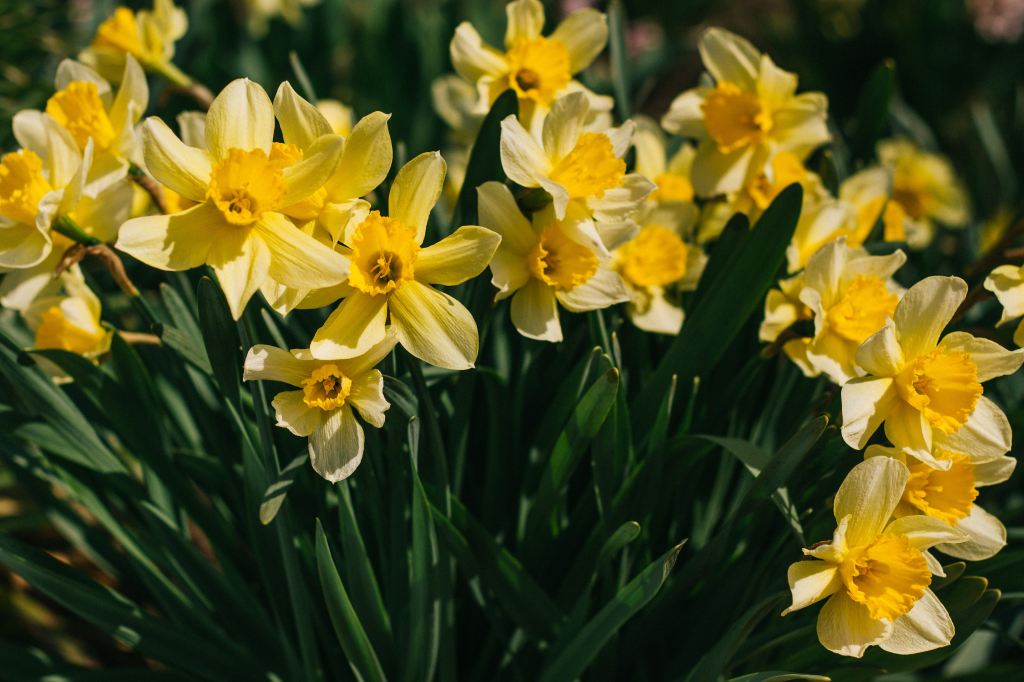
My feelings about Easter are as balled up as those sheets that were so hard to sort. Of course, I sorted and folded those sheets. Easter? Not so easily sorted. But I confess I am more than a little intrigued by the way you continue to pull at me, Easter, the way you are a part of me in spite of me, the way as you near, I am anticipating something and like the sealed-up daffodils that rise and stand ready to bloom, I feel like I might burst open overnight and smile and wave at anyone who will look my way. 

A Love Letter

Dearest H,

Who am I to try to write you a love letter? I am no Rumi with Shams to guide me and light the way. If only I possessed the lyrical language of Hafez or could write of love like Gibran. No Neruda or Shakespeare, I am incapable of composing a love sonnet. I cannot elevate you in poetry with the attentive grace of Mary Oliver. There is no Cyrano to do this for me. I am but a mere word pauper who nonetheless loves you without reservation.

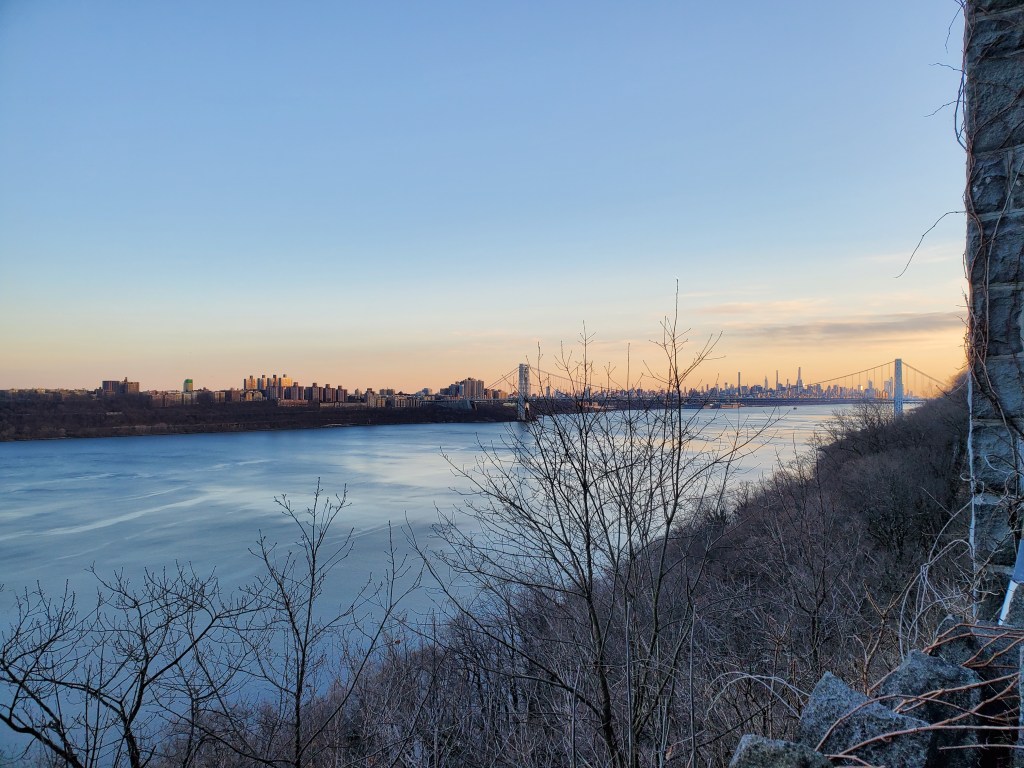
You are the flowing altar which I worship before every morning whether high above on the cliff or down below walking alongside you. You are the one I turn to throughout the day for solace, quiet moments of respite from the noise and chaos of a battered world, sustenance for my spirit.  

Mesmerizing on a sunny day adorned in twinkly fairy lights dancing across your surface, you are ready for admiration, and I cannot look away. You still me when you are as placid as a sheet of ice, quicken me when restless with feisty whitecaps. I am your thirsty student waiting to hear what my teacher has to say.

Host extraordinaire, double-crested cormorant, red-tailed hawk, eagle, osprey, mourning dove, ring-billed gull are but a few who feast on your hospitality. Battles have been fought for control of you. Great artists have reverenced you in paintings. Giver and sustainer of life, part ancient tidal estuary changing directions with the tides, thoroughfare for commerce, recreational playground, barges, yachts, ferries, sailboats, canoes, kayaks all traverse your waters. 

Oh, glorious Hudson, how, my beloved, can we ever repay you? Perhaps not simply with paintings or words of praise and hearts wrapped in wonder, but in tender, lasting care so that you may continue to flow ever on, evermore. 

Forever yours,
oxj

A bow of gratitude to Waterspirit for their eco-spirituality work, especially around precious water, and for inspiring me to write a love letter to the Hudson River. Happy 25th! You can learn more about them here: www.waterspirit.org