Easter Challenge

“I wish that I could show you when you are lonely or in darkness the astonishing light of your own being.” This famous Hafiz quote pushed its way through the clutter in my mind today to take front and center. 

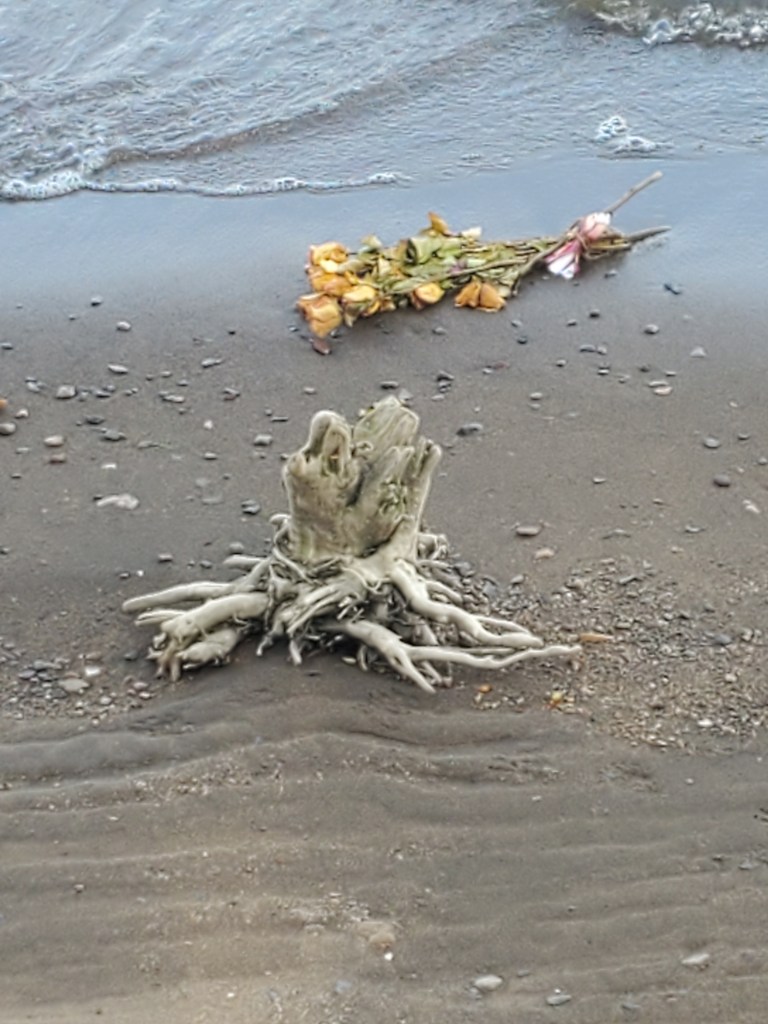
Yesterday, I wrote you a note and rolled it up in magnolia petals and tied it to a bunch of dried roses. We found a new spot on the Hudson to have a memorial chat, and I thought I could hear you laughing when I tossed the bouquet and failed to release it in time causing it to boomerang back at me but still somehow landing it in the water. I laughed, too. And I think I may have heard my father groan from wherever it is you guys are these days.

Eastertime is often fraught for me. This year was no exception. But nudges have come like the one from Hafiz and from Julian of Norwich’s words, “All shall be well… for there is a force of Love in the universe that holds us fast and will never let us go.” And then one other presented.

Part of my job includes oversight of the Sisters of St. Joseph of Peace archives. I look forward to weekly meetings with the congregation archivist who often surprises me with an interesting find. Several months ago, she handed me a paperback book called A Free Spirit, which purports to be a transcript of the channeled conversations between the order’s founder, Margaret Anna Cusack, and a writer named Patrick Francis.  Just as we had both agreed it wasn’t archival, and we could toss it, I thought, wait a secondthis is right up my alley.

I finally finished it this morning with mixed feelings about the content. In a wide-ranging discussion, Margaret Anna addresses many subjects, the evolution of the soul and how that occurs being but one. She grabbed me a few times, including with this passage toward the end: 

“The first and most important point is acceptance of your own divinity. To an orthodox religious practitioner that may sound sacrilegious. However it sounds, the fact is that all souls are part of God; in other words, the loving energy that is God animates all souls.” 

Am I—are we—up to the challenge of accepting ourselves and others as divine, of seeing, or at least imagining, the astonishing light of our beings? To fully embrace that requires a disciplined practice of shifting our focus and holding fast to that knowing, even when we’ve disappointed ourselves, or been disappointed or hurt by someone, some circumstance or group, by life or love. It requires constant awe and wonder. I think you, my river friend, have offered me this Easter gift and challenge, and I accept.

Incarnation

nico-frey-722847-unsplash.jpg
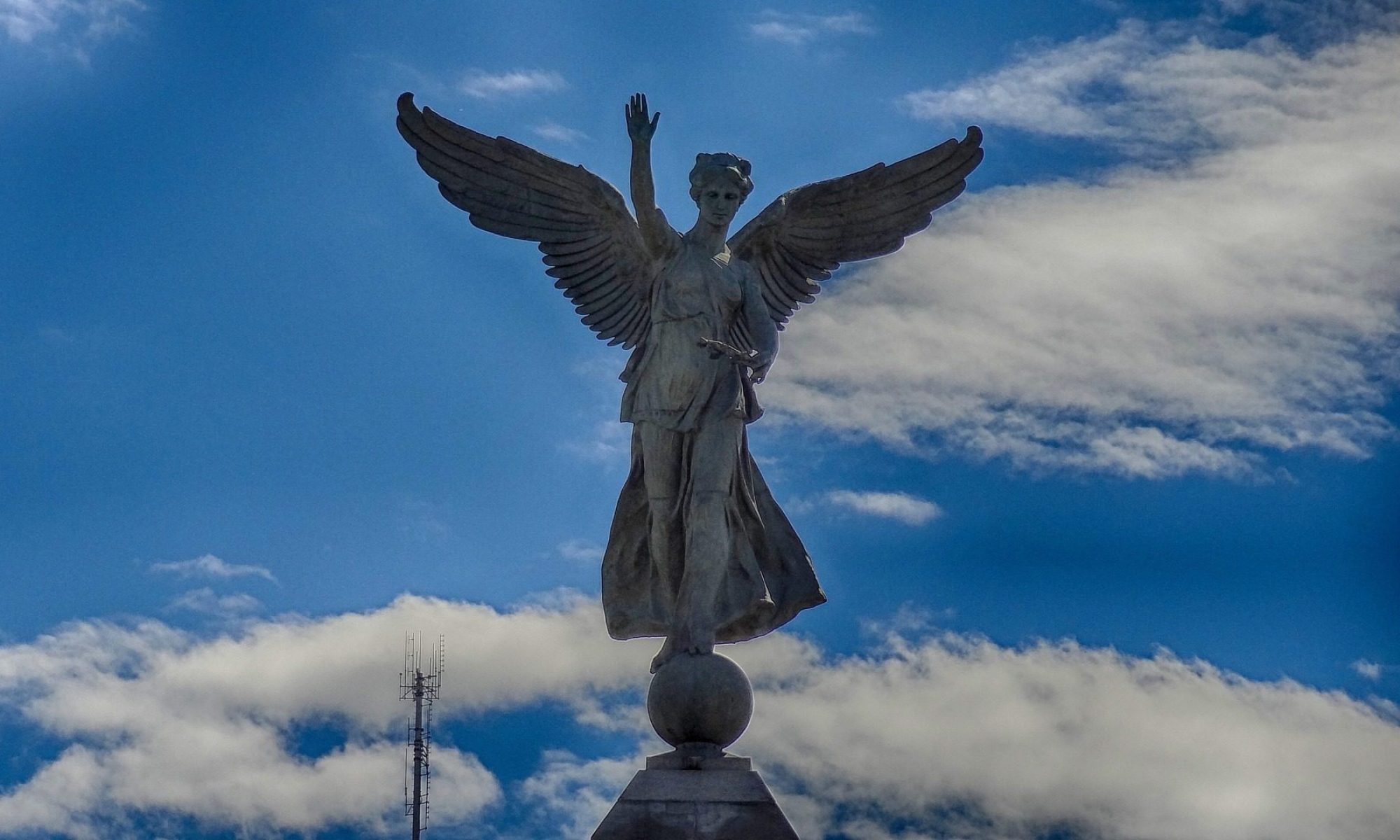
Blades crack, sinews pull, a pinion forces a tear creating space for the next, and the next, and all that come after. Torso drops forward to support the transformation. The invisible unfolding is swift. Arching upright, wings expand to full. The familiar weight rests easy, feels good, is a comfortable carry.

These are not strap-on, costume feathers for fun or show. They go entirely unnoticed, moving easily through busy streets, fitting comfortably on crowded subways and planes, in tiny elevators and hospital rooms with humming machines, blinking lights, ambient exterior noise, blurring days. There is nowhere they don’t or won’t go.

They enter cavernous silences bringing offerings of what is needed–a gentle touch, an unexpected smile, a compassionate heart, unconditional love made easy. They bring the hands and hearts that treat the sick, that help those stuck in the snow, that pamper with haircuts and massages, tend and comfort the children, feed the hungry, adore the animals. Their ears patiently listen; their hearts make soft landing for vented anger and fill the cup with laughter on days that teeter on the edge of sorrow. It takes but a sliver of grace inserted in a gaping ache.

So effortless and unconscious the alteration, sometimes you forget who you are, that you joyfully made the promise when you signed the covenant to come. Yes, there are the troubled days in between, transformation stunted or thwarted, leaving in your wake misfired mercy and smoky, ruffled plumes. But for the most you bring the peace, hoist the courage, set things right for at least one in some significant way. You are the guardian and incarnation of the angel you shelter.

Grateful for Grace

On the eve of Thanksgiving here in the States, naturally I am thinking of gratitude. That said, gratitude is not just for Thanksgiving. Many people have a daily gratitude practice, either journaling what they are grateful for or taking time to reflect on gratitude. This practice is said to have numerous profound benefits, including making us happier, healthier, more spiritual and better sleepers. For a complete list, visit the Happier Human website.

That’s good news, but a few other things caught my attention on the subject recently, including a suggestion from an online astrologer–yes, an astrologer–“to give thanks for what once may have seemed to be a liability or problem.” Now that’s something to think about.

Elizabeth Briel, in A Book of Grace-Filled Days (2013), for November 23, writes:

I will give thanks to you, O Lord, with all my heart – Psalm 9:2
Note how often the whole heart is referenced in Scripture. This implies that nothing is held back, that no part is hidden or kept to oneself. Are there parts of me I am trying to hide and control? Are there aspects of my life for which I resist God’s healing touch?

Could it be that the parts of ourselves that we most ignore or try to hide or control are the parts that most deserve our attention, gratitude and perhaps our forgiveness? That requires an openness, an invitation to grace. Grace is a mysterious gift, never unwelcome, often bestowed when we least expect it. It is not the nature of grace to always be direct or obvious; sometimes it is the opposite of what we think we know or what we expect or desire.

I am thankful for much, including and especially medical professionals and caregivers, and for the grace-filled people in every single service industry. But I am also grateful for the grace that has come my way in unexpected packages, for sorrows that I hope make space for deeper compassion and for a light that somehow refuses to be snuffed regardless of the weight of our world.

I See You

Many of John Kingham’s words give me pause. We live in vastly different worlds, he and I; John is an inmate locked up in Florida, while I am living freely in New Jersey, too often taking for granted the privileges that come with my freedom.

I was first introduced to John when he wrote to Sister Sheila about Living Peace, among other things. He is a subscriber to Living Peace through Sisters Janet and Rosalie, mentors and companions to him. I shared that first letter to Sister Sheila with the Living Peace editorial board, and we decided to invite John to write an article about his experience of starting a Zen sangha in prison.

When I sent him the proof copy of his article, he wrote back to tell me how excited he was to see his words in print. He was grateful for the opportunity to be heard, mentioning in a matter-of-fact, not complaining way, that life in prison reduced one to a dehumanizing anonymity where the inmate is not heard, seen or noted. “One of the more potent insults is I don’t see you.”

I received that letter just a few days after the eclipse. Someone I was watching with commented on how that event was so uplifting and unifying here in the States. Indeed, while nature is screaming her pain through hurricanes, earthquakes, floods, droughts and wildfires, her beauty and rhythms go on (so far) in spite of our abuse. Apart from being a spectacular natural event, the eclipse was a reminder that the most important things–the sun, the moon, the stars, our essence, our center, our strength–cannot be taken from us.

I doubt John or his fellow inmates were out in the yard viewing the eclipse with a pair of special glasses.  But  it took a lot of dark hours locked away for him to shed light on his spirit and then learn how to stay centered in unforgiving circumstances.

It’s easy to forget about the populations we cannot see, convenient to judge or dismiss them. There is no requirement that we believe in the ability to transform, but so much that is worthwhile and gratifying is born of an effort to change or to help others do so. A heart permanently eclipsed by an inability to see might just be a heart in need of some special glasses.

You can read John’s article, “A Field of Future Buddhas Waiting to Bloom” in the latest issue of Living Peace.

Go Ahead and Gorge

When inspiration and creativity seem like close friends who have moved far away, my world can get a little gray. I’ve learned, however, I will eventually find my way out of the Chinese box through art in one of its many forms.  After five episodes of David Gelb’s captivating series, “Chef’s Table,” I can feel my close friends returning. Gelb profiles some of the most renowned chefs in the world who share wonderful life lessons garnered on their journeys to becoming who they are–not necessarily new lessons–but refreshing reminders with a twist from world-class chefs. You do not have to be a foodie to appreciate what’s being served here.

Niki Nakayama is a master at modern kaiseki, a Japanese multicourse meal rooted in ancient eastern philosophies of being in harmony with nature. Nakayama fought long-held gender biases in her country and her field to reach her level of success. Not comfortable making loud, bold statements in her life, she values those expressions in her cooking–breaking rules, aggressive flavor combinations, carving her own path. She learned the importance of trusting herself, knowing when to let go in order to regain the spark of passion in her work.

All of the chefs have experienced failure. There is a common understanding that growth does not take place on a secure path, hence there is a willingness to take risks and to reinvent and change course in order to succeed. Dedication, perseverance and being true to oneself are common themes among these master chefs who create dishes that not only look like works of art but carry appellations like the Industrious Beet, and King George Whiting in Paperbark, and Oops! I Dropped the Lemon Tart.

Respect for ingredients is both mandatory and part of the joy of the art. Dan Barber of Blue Hill, a restaurant in New York, has devoted himself to sustainable cooking, working with growers to provide the most flavorful ingredients, while tending to care of the planet.

Teamwork is another echo in these profiles. To a one, these culinary geniuses value her or his team and the symphony of collaboration in the making of something amazing.

Stating the obvious, creativity is more than a required riff among these chefs. It is the essence of everything they are doing. They draw inspiration from other art. There is talk of cooking being soulful, as well as rooted in childhood experiences and memories, evoking scent, flavor and comfort from those years. The chefs strive to create unforgettable, unparalleled experiences for their guests, conjuring magic in explosions of joy and flavor.

As the imagination runs wild and the mouth waters seeing these chefs’ delectable dishes, the spirit is quenched and awoken by their passion. I am reminded anew that creativity is where life meets the divine and where we live in the moment. Inspiration is sparked by curiosity, our experiences and the amazing creation all around us, including that which feeds us, literally and figuratively. The supply is limitless. So go ahead and gorge; it’s also calorie-free.

Magnificence!

We have come into this exquisite world to experience ever and ever more deeply our divine courage, freedom and light!” Hafiz

In her book Dying to Be Me, Anita Moorjani writes about her near death experience, which occurred when she was losing a four-year battle with cancer. Rushed to the hospital, she went into a coma and was not expected to live. She refers to the place she went while in the coma as another realm.  While in this realm, her powers of perception were magnified so that she was taking in much more. She was able to see and hear what was happening in her hospital room and beyond.

There is much in her experience that is profound and amazing, so much so that at times she confesses she doesn’t have words to properly describe it. She writes of feeling the magnificence of her soul and of being completely fearless and overwhelmed by love. She was also able to see the myriad life connections, how every soul is connected, how every living thing is connected and has a unique and important part to play. In this state, realizing who she truly was, Moorjani was able to make the decision to return to life on this plane, though she was more than content in the other realm. She knew when she returned here she would fully heal, which she did, stunning her doctors and her family.

Moorjani’s message that our souls are magnificent cannot be overstated. It’s the type of message, however, that we tend to take at face value and not fully internalize. What if we were to truly believe that we are magnificent and perfect just as we are? Would we then rejoice in who we are? Rejoice in our magnificent lives? How would it affect the way we interact with and treat one another? What if we truly understood the meaning of the connections in our lives, even the ones that seem sour, and that each person we encounter is important to us in a unique way just as we are to those we encounter?

Times are unsettling and uncertain right now, which may make it the perfect time to recognize our personal wattage, to magnify and expand our light.

Divine Ready

Not long ago, I woke up with the words “divine ready” in my head. The message might as well have been Sanskrit in terms of my ability to decipher it. Was the Divine ready for me, or was I supposed to be ready for the Divine? Had a celestial being stuck a numinous fork in me while I slept and pronounced me ready to come out of the oven? And if so, it’s about time! Who knew I would be a slow cooker that took decades to roast to heavenly readiness?

I have been pondering the celestial message ever since. Maybe a word was lost between sleep and waking and the message was really intended to say, “Be divine ready.” That sounds simple enough. In fact, aren’t we all divine ready from the moment we’re born? There is a difference, though, between showing up willingly and open to receive and showing up tuned out, playing our same old songs, not open to new rhythms and beats which may carry life-giving, life expanding messages.

Truly being divine ready may take some effort and attention, listening with not just our ears but with our hearts and every divine cell of our beings. It might mean being present and sometimes still, going with the flow instead of anticipating it or trying to direct it, experiencing the divine in absolutely everything from anxiety about impending news to dashed hopes and expectations to unanticipated joy and surprise encounters.

It does not have to be—and usually isn’t—spectacular and yet, what about every breath is not spectacular? The Divine is, was and always will be ready. Are we ready for the Divine? I am staying tuned for some new music, keeping my eyes open, trying to decipher if the tinnitus in my left ear is really an angel speaking to me, and remaining open to new possibilities with every breath.