I Am Speaking, Are You Listening?


On a chilly morning after a sleepless night, I shuffle-walk toward my friend Barbara, a silhouette of herself in the dim morning light. In another week it will be dark at this hour. We exchange murmured good mornings, as if we might disturb someone.

“Which way?” 

I look to my left and right. “Not the hills.” The hills are for mornings after good sleeps with a weekend on the horizon.

Conversation takes time, picking up pace as we get used to the temperature and build our stride. In 50 minutes, sometimes we do not talk much. Other mornings there is not enough time to cover everything. 

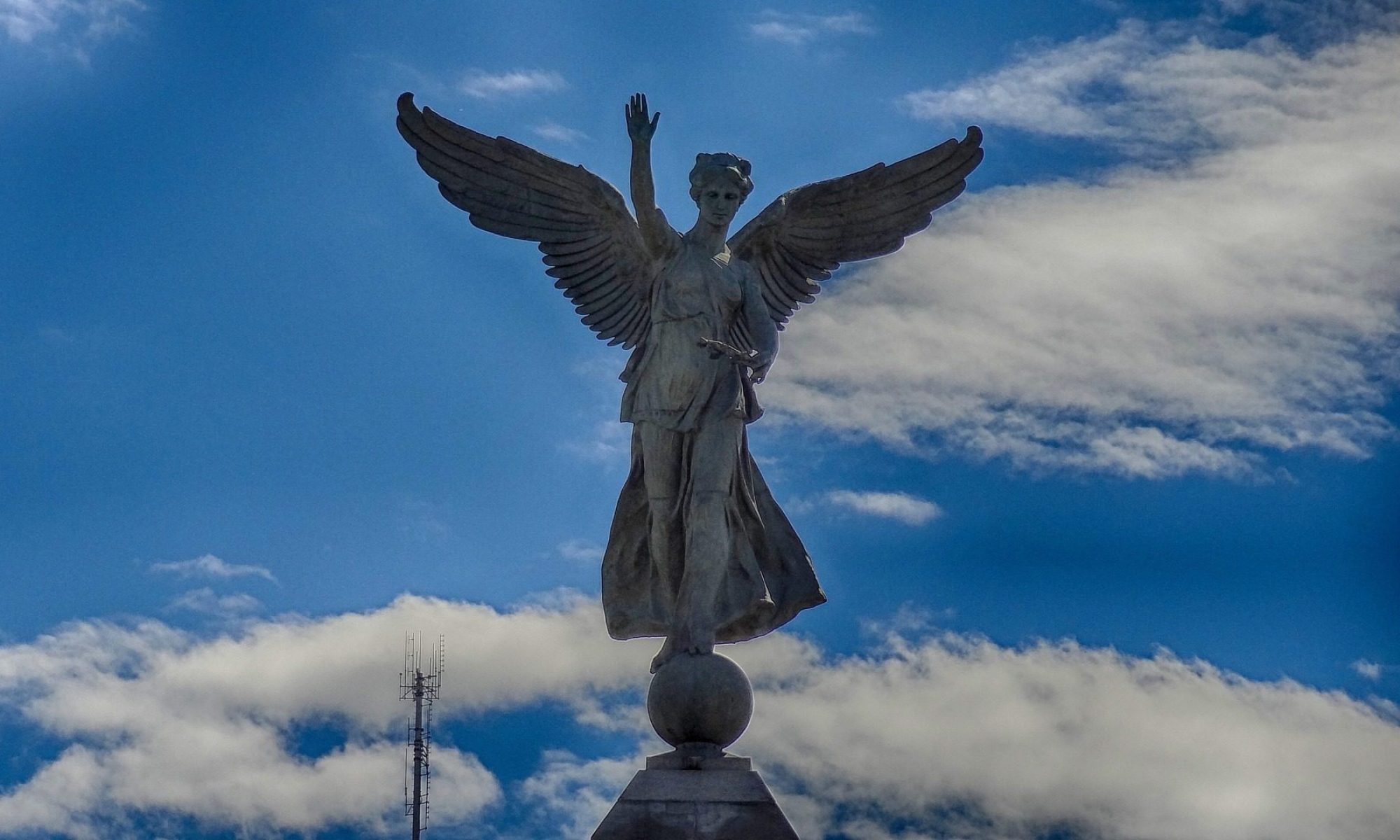
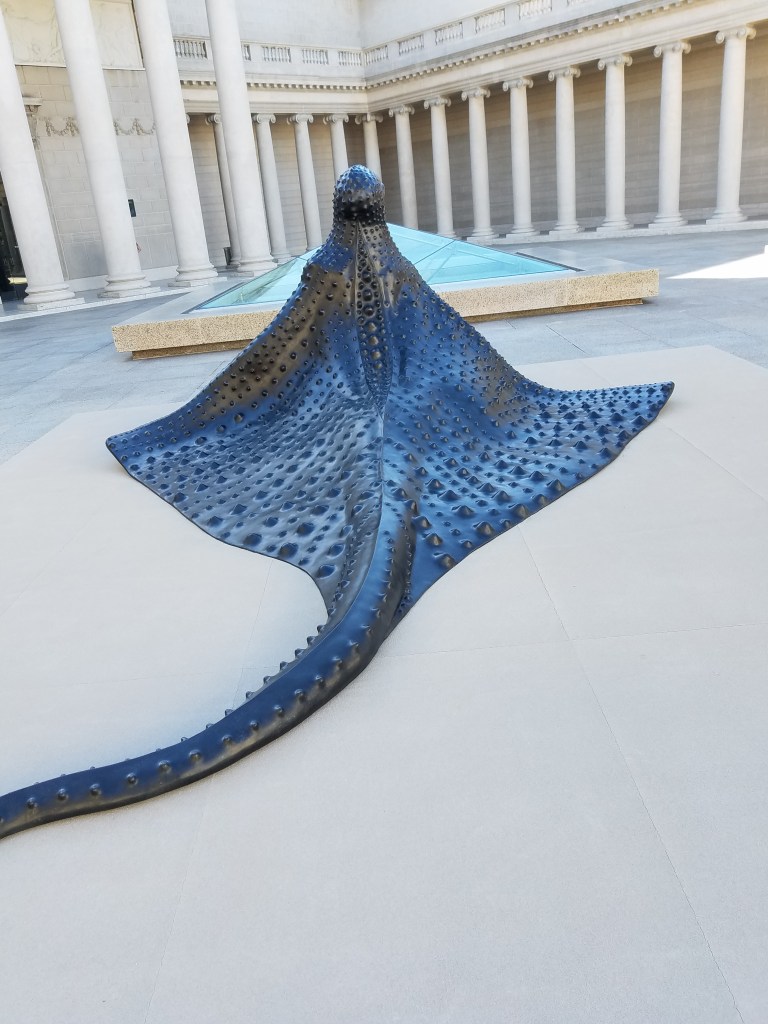
I try unsuccessfully to describe the Wangechi Mutu “I Am Speaking, Are You Listening?” exhibit at the Legion of Honor in San Francisco. Words are inadequate to express how her art, the scope of her imagination, utterly captivated me in every way, how she explores the intersections and overlaps of the socio-political, the environment, spirit, beauty, and how on tough days I try to channel the power and grace of her chimerical sculpture Mama Ray. Half Manta ray, half woman, she is regal, stunning, provocative. I tell Barbara I feel like a fish out of water. She says that’s because I am, and then assures me it’s not a bad thing.

Barbara, a mother and physician, is more pragmatic than I. As we watch the sun rising over the Hudson toward the end of our walk, she tells me about an app called Twiage that a friend of hers developed that is revolutionizing the way ambulances communicate with hospitals. I am truly captivated again, in a different way, by this story of innovation and hope, aid for the overtaxed health care field.  

Her young son has the soul of a poet. The recent death of a fish required a card to go on the journey with the dearly departed: “Good Bye Fish. I Miss You Fish.” I say a silent prayer-wish that his heart remains loved and protected, that the flame of compassion is never extinguished. I’m reminded of the disproportionate amount of goodness, love, and healing children beam into the world, effortlessly and unwittingly balancing energies so the rest of us can carry on.

The sun is up. I part ways with my friend, spirit renewed. I will not need to be Mama Ray today. And I am listening. 
Thanks

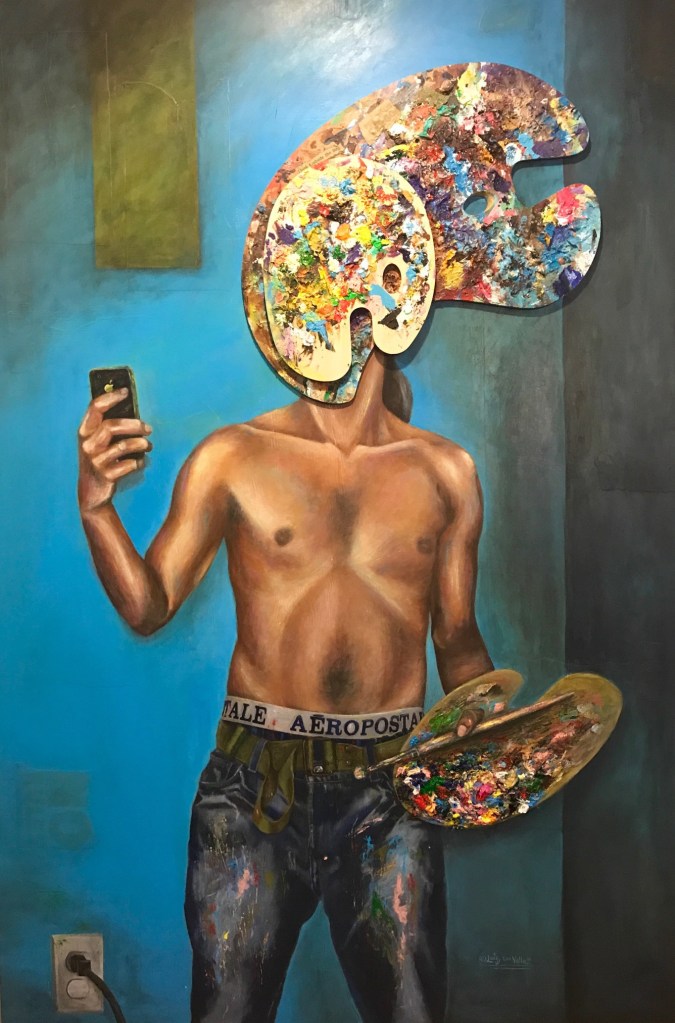
Selfie inside-out by Luis Del Valle. To see more of Luis’s art and learn more about him visit: https://www.lovehopeart.com/

Midway through the walk from Allison Park to the George Washington Bridge there is a pair of benches that overlook the Hudson River, one facing South to the city, the other towards the Bronx. They are usually occupied, but on a recent Saturday during a gentle rain I found them free and decided to stop. That’s when I discovered that a graffiti artist had been there before me.

I’ve never cared for graffiti in nature. But on graffiti in general my thoughts have run the gamut over the years from detesting it to a desire to understand it to outright appreciation in some cases. Was that “Thanks” written on the lower right corner of the Bronx bench? No, on closer inspection it was an indecipherable word.

I continued my walk, the graffiti taking me on another walk in my mind. Years ago, I met a graffiti artist when he was painting a mural on a bridge in my neighborhood. At the time, I was writing a column called “Meet Your Neighbor” for DC North, a community paper in Washington, DC. I asked Luis if we could talk.

Luis’s family fled Nicaragua during the Contra war and eventually made their way to DC where, in the early-90s, a different sort of violence was taking place. Addicts, dealers, and gangs were prevalent in Luis’s neighborhood. When we met, he had resisted the pressure to join a gang and personally knew eight people who had been killed that year. At the same time, Luis was being pulled more deeply into art. A teacher recognized his talent and got him into the Corcoran School of Art. Less than a mile from where he lived, he told me he found a whole world he never knew existed. A mentor there encouraged him. Now a successful artist with his own family, he is active in his community and teaches young artists.

We each have so much power. With it comes opportunities to sow hope, foster growth, possibly change the trajectory of a life. Reflecting on Luis’s story, I remembered some of the people who altered my path, including the man who gave me the column that allowed me to interview Luis.

I thought about circling back to take a picture of the Bronx bench so I could decipher that word in the corner, but I decided it was better to remember my first impression. And when I got home, I took a lipstick that doesn’t get much play these days and scrawled my own graffiti across the bathroom mirror: “Thanks”.

A Surfeit of Senses

Image by 8926 from Pixabay

Art is a powerhouse of sensory stimulation matched only by nature–which it so often depicts–in its reputation as soul food. Recently, I had a long overdue art fix with friends that started at the MET on Saturday and ended on Sunday with the Van Gogh Immersive Experience, a multi-sensory art event. 

Van Gogh purportedly had a neurological condition called synesthesia, specifically in his case, chromesthesia. British neurologist, Dr. Oliver Sacks, described synesthesia as “an immediate, physiological coupling of two sorts of sensation.”  Synesthetes might equate taste with different shapes or colors with certain numbers. Red is five, two is blue, three yellow, and so on. In letters to his brother Theo, Vincent described seeing colors when he heard music. 

The immersive experience channeled Van Gogh’s art through the lens of his chromesthesia in a spectacular audio-visual movie that felt not only multi-sensory, but multi-dimensional. At times, the floor seemed like it shifted underfoot or slid lower on one side. Music and light effects served as conduits from one period of his art to another and enhanced the art being projected on, not just the walls, but ceilings and floors.  

Sacks devoted his life to treating, researching, and writing about neurological conditions, including synesthesia. These types of conditions are rarely celebrated in the moment, but Sacks found a way to explore and explain them to a broad audience, opening a portal to people who perceive differently, who live alternate realities. Van Gogh, who suffered from depression and mental instability unrelated to his synesthesia, took his own life at age 37 and was only recognized as an artistic genius posthumously.  

We alternately crave peace and stimuli to rejuvenate us. Both coexist together in one electrically charged human body living in a magnificently connected whole. Does Van Gogh’s arc suggest a kind of transformation that we cannot foresee or control, one that begs us to perceive differently in real time and not wait for history to show the way? We can be awed right now, not dismiss the uncomfortable, but instead experience with a multi-sensory heart that asks, “What am I being shown? What can I learn? How am I connected?” 

Clifford on My Mind

Happy Father’s Day to all good fathers and grandfathers!

When my Grandpa Wilson—Clifford—comes to mind he arrives like a seductive sax in a jazz riff that rises above the noise during brunch rush. He was always there, but until a minute ago, I didn’t notice him.

My whole world turned upside down when I was seven, and in the turning a new cast of characters entered, including Clifford and Grandma Wilson—Mildred—and their dog C’est La Vie. We moved that year a few blocks away from them and got our own dog, Cooper. Most afternoons Clifford would pick up me and my brothers and Cooper in his white four-door Chevy and take us for walks at Good Templar Park less than a mile away. C’est got pride of place in the passenger seat while the rest of us sat in the back. 

Over time, my brothers dropped out unless there was a big snow and they wanted to sled Dead Man’s Hill. With nothing better to do, I was steadfast. Clifford usually parked in the cemetery where we often walked before or after we set out for the adjacent woods. I learned about different grave markers; an ivy wound tree stump with a child’s winter cap atop and a single blade pair of skates leaning against belonged to a boy who drowned skating. The big armchair where I liked to sit was where Loie and Hal Naylor were laid to rest, the engraving on the back, “Pals.” Clifford showed me where my mother’s grave was, something no other adult had thought to do. 

Most of our time, though, was spent walking in and around the woods. There was a creek that ran cool all year where I wanted to be timed standing in my bare feet to see how long I could take the cold, my version of a polar bear club. From the creek, we climbed a hill that was covered with Lily of the Valley in springtime. When we reached the top, Clifford would find a spot to eat an apple and take a nap in the sun on a slope that faced west with a view of the Fox River. I would climb a favorite tree and survey the meadow and the walnut trees, jumping down when I saw him coming with the dogs.

We didn’t talk much, Clifford and I, but a lot of healing took place on those walks where nature and steady presence were good medicine. They still are and so is a seductive sax that rises above the noise and catches me by surprise.

Pearl Cocktail

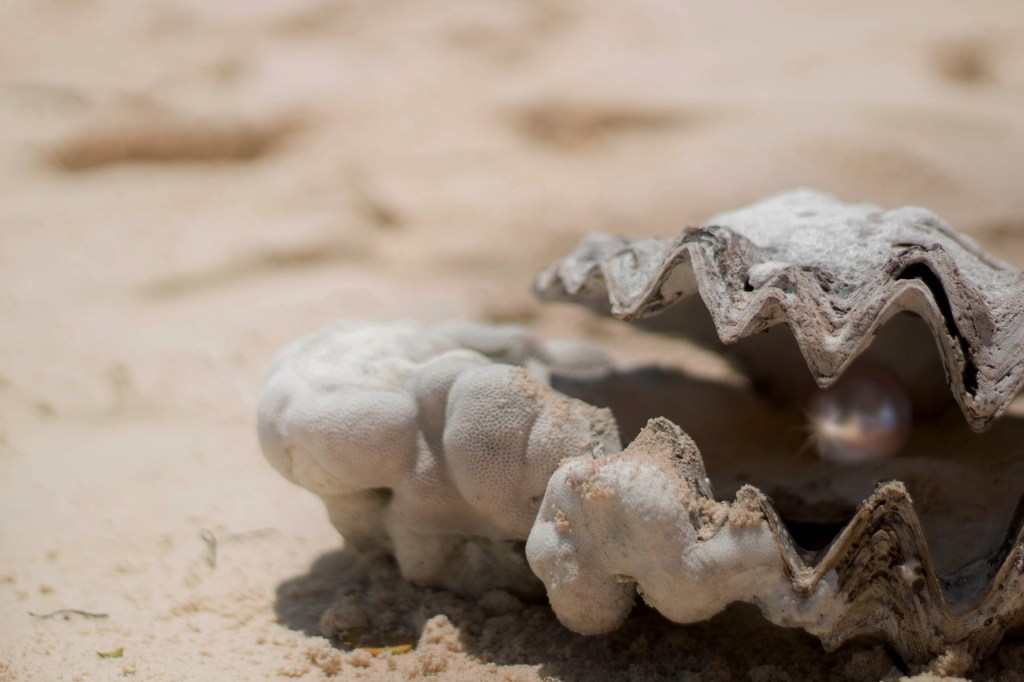
Image by Schaeferle from Pixabay

What do Kamala Harris, Elizabeth Taylor, Rumi, Grace Kelly, Jackie Kennedy, Coco Chanel, and Shakespeare have in common? A love and appreciation of pearls. And they are not alone. For centuries pearls have been equated with prestige and wealth, metaphors for transformation in literature, art and philosophy, and symbols of luck, beauty and purity.

The lore and allure of pearls is as vast and varied as the bodies of water from which they are harvested. Venus and Aphrodite were said to have emerged from an oyster shell. And if the story is true, Cleopatra famously set out to impress Marc Antony when she wagered a bet with him that she could host the most expensive dinner in history, thereby exhibiting Egypt’s wealth. She finished that meal with a cocktail made from one of her own very expensive pearl earrings—worth millions even then—crushed and dissolved in a goblet of vinegar wine. Wager won. 

Pearls are formed when an irritant works its way into an oyster, mussel or clam causing a defense mechanism to secrete a fluid, nacre, that coats the irritant in layers to form a luminous pearl. It can take anywhere between six months to four years for a pearl to be ready for harvest. Cultured pearls are surgically removed without harm to the mollusk, and sometimes an irritant is reintroduced to seed the growth of another pearl.

In a letter to his brother Theo, Vincent van Gogh wrote: “The heart of man is very much like the sea, it has its storms, it has its tides and in its depths, it has its pearls too.” Some of the pearls that are formed from the irritants that land on the mantles of our hearts and souls are never harvested, while  others can take a lifetime to harvest. The removal of them is a delicate process, not always as surgically precise or efficient as those harvested from oysters, but the yield is as priceless as a cocktail concocted by Cleopatra herself. 

Cowboy Bart

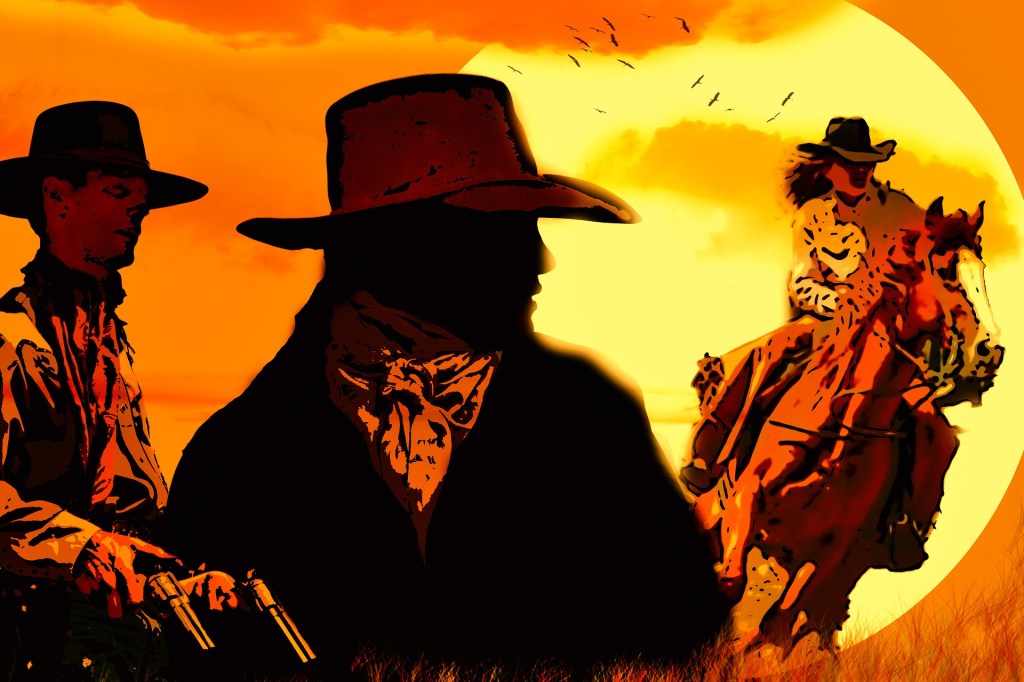
Image by kalhh from Pixabay 

Slick Bart stole my heart and kept on riding out of town where he hung it like a Christmas ornament from a branch on the old Oak at the edge of the Hemphill farm. Two-shot Sam came along and took aim, gunning it to the ground on his second shot, whooping “Yippee!” He left it there to rot but before it did, a herd of cattle stomped it right good. I reckon it was the rain, though, that really finished it off, fertilizer for nothing.

Down by the brook, I felt light as a feather without that damn heart always stopping and stalling me in my tracks. I lied back on Flat Rock taking a sunbath thinking about absolutely nothing when a cloud darkened the sky. Go on, then, pour down on me. But no! It wasn’t thunderclouds that took the light. I squinted up at the sound of her voice. 

“You really gonna’ just lie there all your days?” 

“What’s it to you?” I spat. 

I couldn’t make out her face up there on her high horse, but I could see she was tossing something beautiful and shimmery in her right hand. “What’s that you got?”

“What’s it to you?”

“Not much. Just curious is all. Go on now, go on your way.”

“Here. Catch.” 

She tossed the glowing slippery orb, and I sat up and caught it in my left hand and nearly dropped it, it was so slick and smooth, made my whole insides warm.

“I’ll be darned. Is this what I think it is?”

“Sure is. Thought you’d be missing it soon. You ain’t gonna’ get far without it, that’s for dang sure.”

I shrugged. “I don’t know.” I tucked it in my satchel all the same.

“Be seein’ you.” 

“Yeah, see you.”

“Stay away from Bart, ya’ hear?” And before she burned the breeze, I heard her say under her breath, “For the hundredth time.”

It seemed like good advice, but I was feeling stronger and decided to take one last trip through town. Sure enough, ‘ole Bart was standing out front of the saloon, right there on Main, admiring his reflection in the window. I admired it, too. He sure did look fine, that Bart. And then he saw me reflected behind his own reflection and turned his attention my way.

“Say, don’t I know you?”

“Nah. Maybe you got me mixed up with some other gal. Just passin’ through.” 

I tipped my hat, pulled the reins and dug in my spurs. “Giddyup, Gypsy. We have places to go, things to see, world savin’ stuff to do.”

Come to Your Senses

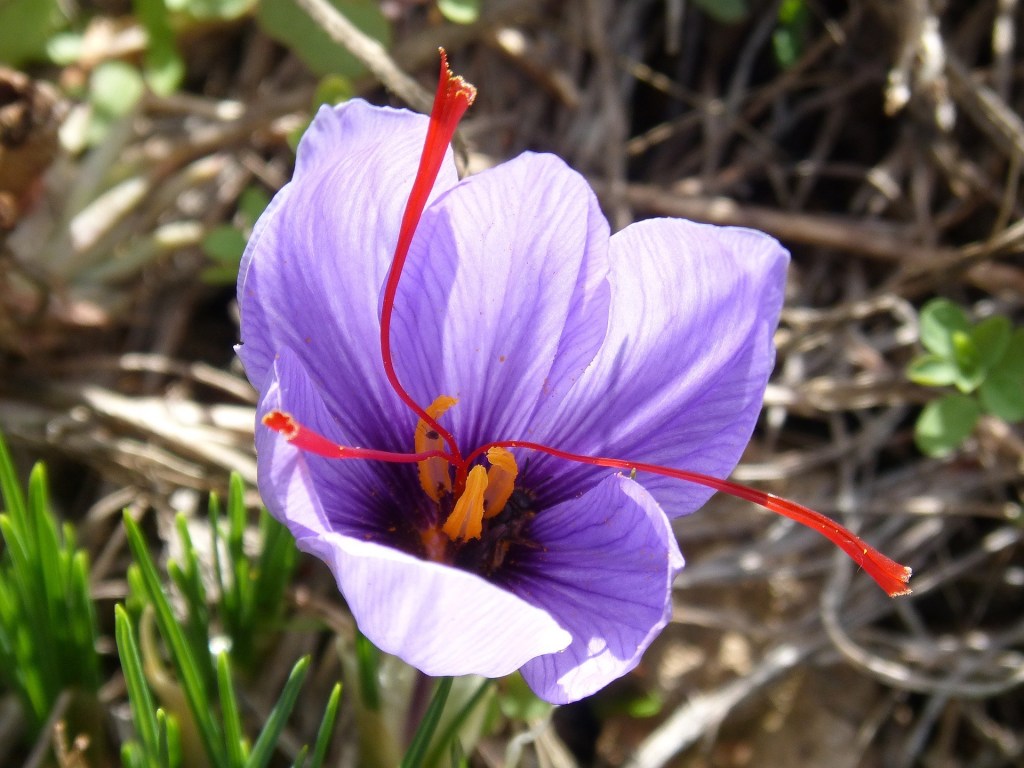
Image by Marc Pascual from Pixabay

Saffron comes from the handpicked stigmas of crocuses. If you have ever used it in a recipe, you know the ritualistic pleasure of unwrapping the expensive crimson threads from their protective packaging, then dissolving them in a bit of water to create a colorful potion that gives the dish a delectable, complex flavor. 

Scent, the empress of evoking memory and emotion, can cause swooning, longing, joy, disgust, illness. In no rush to be anywhere, scent often lingers, sometimes heady like a lover’s cologne, lilacs in springtime, evergreen, or at times unpleasantly potent like the stench of decay, smoke from fire, a skunk in the road. 

The soul soars to what is music to our ears—a song, a voice, the sound of laughter, ocean waves, waterfalls, the clink of glasses. It withers in pain from the assault of noise pollution—leaf blowers, honking horns, screeching tires, raised voices. Our reality is painted by the images and colors we see. Dreams are more vivid and memorable when a shock of color highlights the stage. 

Out of habit or choice we can unconsciously ignore or willfully shut down our senses forgetting how much they feed us. A very sick friend surprised me when she said, “It’s nice to be touched again.” Her medical care required more touch than she had experienced in a long time.

We can be robbed of our senses through illness or accident. Lack of taste and smell are key symptoms for many who have had COVID-19. The pandemic has reduced our ability to give a hug or a peck on the cheek, a handshake, to travel. Much of our interaction is by necessity through phones and computer screens, a blessing to have at least that.

“Come to your senses” suggests returning to a proper state of mind. As we witness what is unfolding and try to quell anxiety with hope, our senses can help maintain equilibrium. They viscerally ground us in the here and now.

Sniff a favorite spice, listen to music that lifts or soothes, savor a favorite dish, meditate on a flowing river, and if you can’t be with someone, give yourself a hug, pet a dog or a cat, take a warm bath. Come to your senses.

FRAGILE


(Cambridge Dictionary) adjectiveUS   /ˈfrædʒ.əl/ UK   /ˈfrædʒ.aɪl/

easily damagedbroken, or harmed

Be careful with that vase – it’s very fragile.
The assassination could do serious damage to the fragile peace agreement that was signed last month.
I felt rather fragile (= weak) for a few days after the operation.
UK humorous No breakfast for me, thanks – I’m feeling a little fragile (= ill, upset, or tired) after last night’s party.

There is a package on the front porch stamped FRAGILE. I feel like I need to have that stamped on my forehead and should behave as though everyone else has it on theirs.

I’ve broken many fragile things in my life, including expectations. In most cases I was careless, carrying too much or not watching what I was doing, crestfallen over the resulting broken item. Or I was insensitive, had a hair trigger reaction, not thinking through how my words/actions might land, not anticipating the feelings of others. This past year I confess, not with pride, to more of that than usual.

We are all worn out and fragile from helplessly watching a pandemic take so many lives and hurt so many loved ones, from the changes it has brought to our lifestyles. Our healthcare professionals—truly heroic always and most especially now—are raw with fatigue. We’ve lost some of them to the novel coronavirus, some to depression, even suicide. 

This massive public health issue is overlaid atop issues that have reached a critical point of no return—racism, violence, climate change, economic injustice, more. Several people I know are also going through personal challenges and losses. Unemployment is high, many are struggling to pay rent and mortgages, to put food on the table.

Even in the best of times, we are fragile packages in a very fragile world, and inside fragile packages are both dangerous things like ticking bombs and priceless, beautiful, breakable things like fine crystal. A fragile vase, even one that’s been broken and glued back together, can still hold water.

This cracked old vase spilled some this morning reading the headlines about the vaccine-filled trucks going on the road. The great conjunction of Jupiter and Saturn—forming the Christmas Star or Star of Bethlehem—will occur on the solstice. It has not been this visible since 1226. In January, a new administration takes office in the US. Out of our fragility rise embers of hope, joy, light, strength.  

Happy Solstice, Joyeux Noël!

A Fine Sermon

Osprey: Audubon.org

At times we all have attention deficit disorder to varying degrees, and that may be truer these days than ever.  I try to cut myself some slack when I find I am staring out the window more often, thinking about not much.

My colleagues know that it’s not unusual for me to be distracted to the point of stopping mid-sentence when I see a raptor out of the corner of my eye. So, it wasn’t that unusual that I was captivated by a white-headed bird perched in one of the trees on the lower part of the cliff. Her head made her conspicuous among the leaves in mid-autumnal wardrobe change. From where I watched, she didn’t seem that big until I put a pair of cheap binoculars on her. Whoa. Was she a bald eagle? An osprey?  Come on, turn to me, let me see your face. Alas, she stayed still, lost in her own private worship of the river.

I stood watching her for five or ten minutes, telling myself I needed to get back to work, but I longed to see her more clearly and to watch her take flight, as I knew she eventually would. Did I really have better things to do? I suppose that might depend on who was being asked. My shoulders started getting tight from leaning against the window ledge with the binoculars pressed to my face.  Ah, there, she spread her wings and turned her masked face my way. Oh divine osprey, you lured me, not for the first time. But she was just shifting in her pew, resettling for a longer meditation, and I was becoming impatient, antsy to leave church. 

Here’s the thing about nature’s divine goddesses; they don’t change their rhythms to suit anyone. They will be still as long as necessary, take flight when the time is right and soar when it’s time to soar. I settled in for what turned out to be a long sermon that, in the end, refreshed my memory about natural rhythms, about patience and stillness, really bringing it home when she finally spread those awesome wings and flew north along the Hudson. Hallelujah!

You Are a Superhero

Several years ago, I attended a dinner party in Washington, DC where there was a lively discussion about whatever political crisis was happening then, perhaps the Clinton-Lewinsky scandal or maybe it was the Weapons of Mass Destruction and the Iraq War. Whatever it was, the volume got louder while I sat mutely wondering how to insert myself. And then our hostess leaned into me and said, “Can you believe what happened in Rex Morgan today?” making me laugh, landing me back on terra firma. For those of you unfortunate enough not to know, Rex Morgan, MD is a long-running soap opera comic strip.

It’s rare this year to be at many dinner parties. Nor do I suppose Rex Morgan, MD could come to my rescue during this time of colossal crises. But when things are as they are—so outsized and incredulous as to be nearly unbelievable—it’s hard for me not to think in mythological, archetypal fairy tale or comic book terms. Dark versus light, good versus evil, real live superheroes gone to the heavens (thank you, Ruth Bader Ginsburg), and not only towns but whole countries in need of dragon slayers to staunch the offering of souls while the Earth beneath us literally burns, quakes and floods. 

What is the meaning of all of this playing out at once—narcissistic leaders, a global pandemic, environmental destruction, racial and gender injustice, economic instability and more? What is the historical, spiritual, cosmic, psychic significance? Oh, it’s been brewing… Are we having a reckoning with karmic justice? 

Part of what is driving a roiling macro anxiety is there are no clear answers, we know we have a long way to go, and also the realization that our sense of control is an illusion. We can strive to respond from our best hearts; that much we can control. And some days our best hearts will be better than others, and that is okay.

We are still allowed to laugh, encouraged to wherever we can find that elixir. And Mother Nature, who has been so unutterably abused by us, still manages to teach us resilience and feed us soul food with her beauty. Woods, here I come. Rex Morgan, MD, perhaps you are worth another look. Friends, family and colleagues who share laughter and fuel hope when mine is waning, call, text, Zoom, social distance with me. Be a superhero when you can. Let me be yours.