Smudge Me

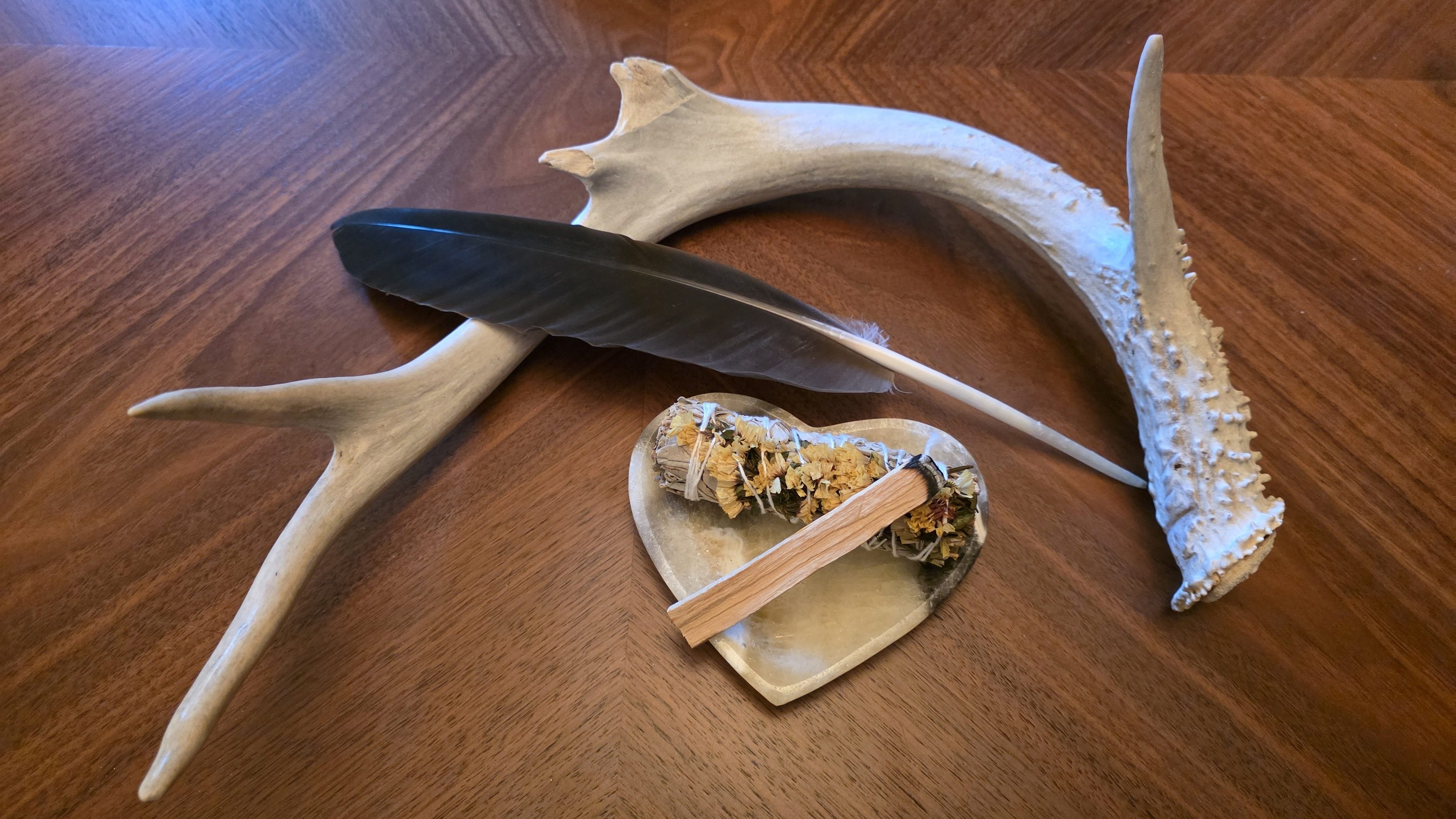
Several years ago, Sr. Kristin came into my office, and I greeted her with, “I feel like I could use a good smudging.” Without missing a beat, she said, “I think so, too.” And off she went returning a minute later with a sage stick, which she lit and with a feather proceeded to direct the smoke from it around my body, from head to toe, and throughout my office, moving slowly and with holy intent. Long after she finished, wafts of the sage’s earthy, bittersweet scent lingered.

Smudging is the practice of cleansing energy, a ritual said to pre-date recorded history. Used in ceremonies and for healing, purifying energy is still practiced today. Palo santo, incense, crystals, and sound vibrations are some of the other natural materials used to cleanse energy.

Energy is palpable. We are made of and surrounded by it. If you do the simple exercise of pressing your palms together, then pulling them apart and pressing them back together a few times, almost like you were playing an accordion, you’ll begin to feel the energy between your hands. 

We’ve all been confronted by unpleasant energy that makes us want to back away. The energy of conflict, even small arguments or tension is like that, or energy that doesn’t mesh with ours. We can magnify this effect exponentially when we think of the energy created by fear and paranoia, the energy that incites violence and war. 

Our energy reflects not only our physical health but our mental and spiritual health. It’s been said that our energy enters the room before we do, and everything flows from that. It affects the energy of the people and places around us, so it’s important to protect it and be mindful of it. What are we exuding?

And our combined energy can have tremendous power for good. “When we come together as a group, with a common purpose and commitment to mindful action, we produce an energy of collective concentration far superior to our own individual concentration. This energy further helps us to cultivate compassion and understanding.” (Thích Nhất Hạnh)

Sr. Kristin has since gone on to another realm, but I have been thinking of her a lot lately and wondering what she would make of what is happening in the world today. I like to believe she’s a spirit in the sky with other holy wisdom spirits, lighting divine sage sticks and smudging the Universe. We need to do our part and meet those divine energies at least halfway. So, yes, smudge me, please.
Sishencong

Image Credit: Pixeljoy / Shutterstock

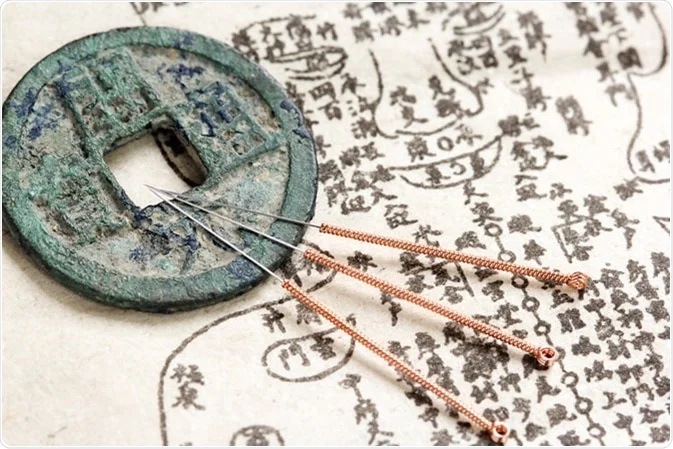
Wearing loose clothing, I lie back on the heated table and start to get ready, pulling my pant legs above my knees, turning my waistband down, lifting my T, arms at my sides, palms down, feet turned out. Uni appears and while she inserts hair-thin needles, I close my eyes and we chat like we would if we were meeting for coffee—about our jobs, what we’ve watched on streaming, if we believe in angel numbers. Of course, we do.

Uni used to finish inserting the needles with Sishencong—the spiritual quartet—on the crown of my head. Now she starts with it and tells me lately she does that with many of her clients. These four points are supposed to calm and clear the mind. Then she continues inserting needles from top to bottom. I stopped trying to count the number after our first session.

My focus always returns to the crown of my head where the quartet is supposed to be clearing a spiritual gateway. I’m grateful for the half hour and beyond that it takes away invasive thoughts about irrevocable and unfortunate choices made, vital things I was told and failed to comprehend, who I might have let down.

Uni directs heat lamps on my feet and stomach; she hands me a buzzer to use if I need to call her. I never do. She turns out the lights, and I drift away until she returns.

Sometimes when I leave, I stop and look at the colorful framed charts on the wall depicting the meridians and acupuncture points all over the body. I marvel that over 3,000 years ago thousands of points were identified creating a switchboard that connects emotional and physical pain to different organs and body parts. How and why did they think to do that? To relieve suffering is the answer. 

Life can get heavy and dark; hope becomes inaccessible for all of us at times. For some that becomes the norm, and for them a deep ache sleeps restlessly inside of me, catching me off guard when it roars awake. I know I am fortunate to lie on Uni’s table, that access to this and other care is inequitable. I tell myself a story that this self-care will make me better able to also help relieve suffering in some small way, and then I vow it’s not a fiction.

Clifford on My Mind

Happy Father’s Day to all good fathers and grandfathers!

When my Grandpa Wilson—Clifford—comes to mind he arrives like a seductive sax in a jazz riff that rises above the noise during brunch rush. He was always there, but until a minute ago, I didn’t notice him.

My whole world turned upside down when I was seven, and in the turning a new cast of characters entered, including Clifford and Grandma Wilson—Mildred—and their dog C’est La Vie. We moved that year a few blocks away from them and got our own dog, Cooper. Most afternoons Clifford would pick up me and my brothers and Cooper in his white four-door Chevy and take us for walks at Good Templar Park less than a mile away. C’est got pride of place in the passenger seat while the rest of us sat in the back. 

Over time, my brothers dropped out unless there was a big snow and they wanted to sled Dead Man’s Hill. With nothing better to do, I was steadfast. Clifford usually parked in the cemetery where we often walked before or after we set out for the adjacent woods. I learned about different grave markers; an ivy wound tree stump with a child’s winter cap atop and a single blade pair of skates leaning against belonged to a boy who drowned skating. The big armchair where I liked to sit was where Loie and Hal Naylor were laid to rest, the engraving on the back, “Pals.” Clifford showed me where my mother’s grave was, something no other adult had thought to do. 

Most of our time, though, was spent walking in and around the woods. There was a creek that ran cool all year where I wanted to be timed standing in my bare feet to see how long I could take the cold, my version of a polar bear club. From the creek, we climbed a hill that was covered with Lily of the Valley in springtime. When we reached the top, Clifford would find a spot to eat an apple and take a nap in the sun on a slope that faced west with a view of the Fox River. I would climb a favorite tree and survey the meadow and the walnut trees, jumping down when I saw him coming with the dogs.

We didn’t talk much, Clifford and I, but a lot of healing took place on those walks where nature and steady presence were good medicine. They still are and so is a seductive sax that rises above the noise and catches me by surprise.